
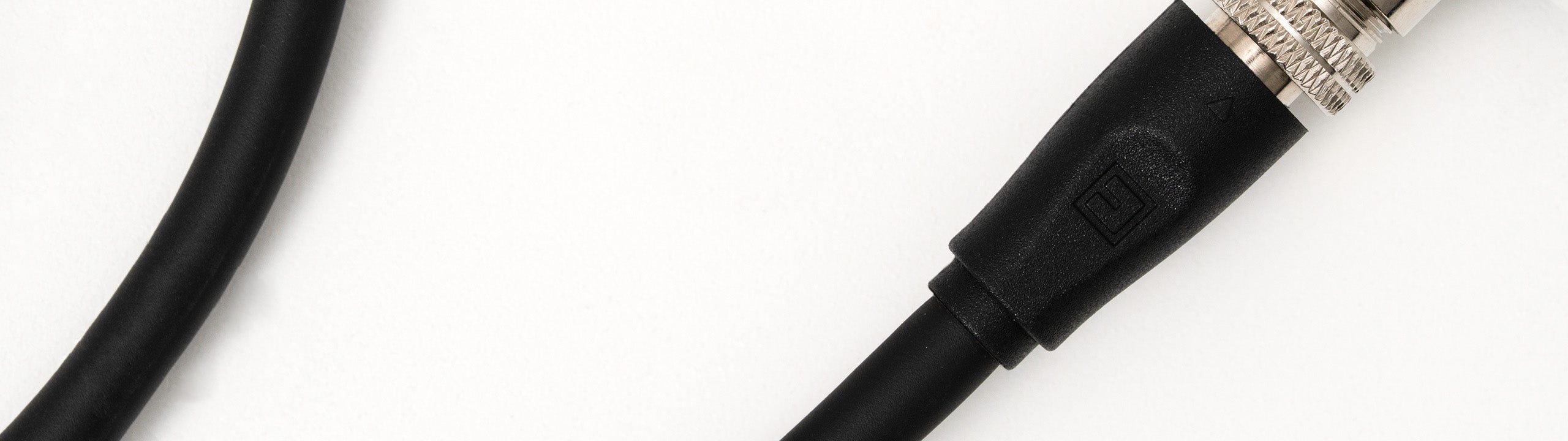
Tensility's TPU M12 A-code cables combine superior chemical-resistance and shielding, ensuring interference-free signal integrity in demanding applications.
Tensility’s TPU M12 cables are designed for reliability in industrial and automation environments. Built with a durable thermoplastic polyurethane (TPU) jacket, they withstand abrasion, harsh chemicals, and extreme temperatures ranging from -40 °C to +105 °C. The shielded construction delivers robust EMI/RFI protection for interference-free performance.
These assemblies are offered in plug → tinned, jack → tinned, and jack → plug configurations to suit sensor and actuator setups. Conductor options include 4C, 5C, and 8C, with 22 AWG and 24 AWG sizes available. The line supports voltage ratings of 30 V, 60 V, and 250 V with current handling up to 4.0 A. Lengths are available in 1 m, 3 m, 5 m, and 10 m, providing flexibility for different installation requirements.
VIEW TPU M12 Cables
For more info on TPU view our Wire Material Comparison page.
Key Features |
Applications |
|
|
FAQs
What is a TPU M12 cable?
TPU M12 cables are industrial-grade cables constructed with a thermoplastic polyurethane jacket, which provides high resistance to abrasion, chemicals, and extreme temperatures. This makes them flexible and reliable in harsh environments. Combined with M12 connectors, these assemblies are ideally suited for automation, sensor, and actuator applications where long service life and consistent performance are required.
What does A-code mean in M12 cables?
A-code refers to the IEC 61076-2-101 standard for sensor and actuator wiring. It ensures consistent pin assignments and compatibility across industrial devices. Using A-coded cables allows integrators to maintain reliable power and data connections in automation environments.
How are these cables tested for performance?
Each cable undergoes testing for shielding effectiveness against EMI/RFI, as well as checks for continuity and insulation resistance. They are also endurance-tested across the full rated operating temperature range of -40 °C to +105 °C to ensure reliable performance under extreme conditions.
At what temperature does the insulation fail?
The TPU jacket and insulation are designed for continuous operation between -40 °C and +105 °C. Exceeding this temperature range may compromise the mechanical strength of the insulation and reduce electrical reliability.
How can signal loss be minimized with M12 cables?
These cables use shielding to block EMI/RFI interference. To further minimize signal loss, the shield should be properly grounded, excessive bending beyond the cable’s bend radius should be avoided, and the correct conductor gauge (22 AWG or 24 AWG) should be selected depending on the application’s distance and current requirements.
